The Invisible Mechanics Elevating Indie FPS Titles in Global Leaderboards
Written by Rosa Sullivan · Aug 16, 2026
The Invisible Mechanics Elevating Indie FPS Titles in Global Leaderboards
Digital storefront algorithms shape which independent first-person shooters gain traction on competitive rankings, and these systems operate largely out of public view while processing engagement signals from millions of players each day. Platforms such as Steam, the PlayStation Store, and Xbox Live employ machine-learning models that weigh playtime duration, completion rates, and social sharing volume to adjust title placement in discovery feeds, which in turn feeds new users into matches and updates leaderboard positions. In August 2026, several mid-sized indie releases recorded sudden climbs of several hundred spots after their retention curves matched patterns the systems had previously rewarded in larger titles.
Core Components of Storefront Ranking Models
Recommendation engines rely on collaborative filtering techniques that compare user behavior clusters across regions, and they prioritize titles showing consistent daily active user growth over short promotional spikes. Data from the Entertainment Software Association indicates that titles maintaining above-average session lengths receive amplified exposure in related-game carousels, a factor that has helped smaller studios reach top-50 leaderboard placements within weeks of launch. These models also incorporate cross-platform telemetry, so a strong performance on one device ecosystem can trigger visibility boosts on others when the underlying code detects similar demographic overlap.
Skill-based matchmaking layers add another dimension because they pair newcomers with similarly ranked opponents, reducing early frustration and preserving the retention metrics the algorithms track. When an indie FPS demonstrates stable match quality scores, the system extends its promotional window, allowing the title to accumulate the wins and placements that populate public leaderboards. Observers note that this feedback loop has become more pronounced since 2024 as more platforms adopted unified ranking databases.
Regional Data Patterns and Visibility Triggers
European gaming federations have published telemetry summaries showing that indie shooters released in the first half of 2026 benefited when their European player bases exceeded 30 percent of total concurrent users, a threshold that often coincides with algorithmic promotion in North American and Asian storefront sections. Australian research groups tracking digital distribution found similar correlations between Oceania engagement spikes and subsequent leaderboard gains in global FPS categories. The pattern holds because the models treat geographic diversity as a proxy for broader appeal, pushing qualifying titles into wider recommendation pools.
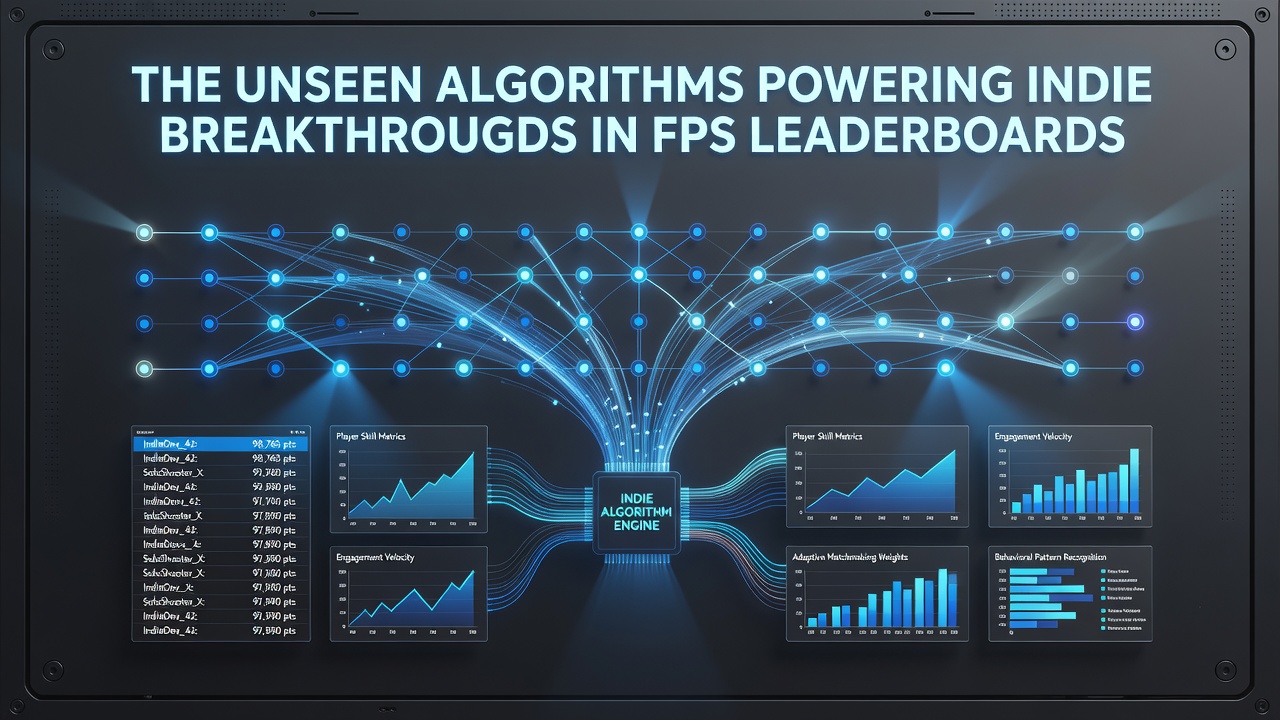
Anti-cheat and anomaly detection subsystems further influence outcomes by protecting the integrity of ranked data, and clean match histories help sustain the positive signals that keep a title in active rotation. Titles flagged for irregularities see reduced discovery weight until issues resolve, which explains why some promising indie projects stall despite strong initial reviews. Those who have analyzed platform update logs report that August 2026 patches refined these detection thresholds, resulting in steadier climbs for several independent releases that previously hovered just outside top-100 positions.
Case Examples of Algorithm-Driven Surges
One European studio documented a 400-place jump on a major console leaderboard after its FPS maintained a 65 percent seven-day retention rate for three consecutive weeks, a metric the platform models had weighted heavily in prior successful cases. A Canadian developer observed parallel movement when its title’s cross-play adoption rate exceeded internal forecasts, triggering additional placement in “games like this” modules. These movements occurred without paid marketing campaigns, illustrating how organic signals processed by the algorithms can substitute for traditional visibility budgets.
Industry reports compiled by the Interactive Digital Media Association in Canada highlight that indie teams monitoring their own telemetry dashboards can identify which in-game features correlate with the retention signals platforms reward. Adjustments to progression systems or lobby design sometimes produce measurable upticks in the data points that feed storefront rankings, and several 2026 releases applied such tweaks mid-cycle to sustain leaderboard presence.
Conclusion
Platform algorithms continue to determine which indie FPS titles accumulate the matches and placements that define leaderboard success, operating through retention metrics, geographic diversity thresholds, and matchmaking stability indicators. Data released in August 2026 confirms that titles aligning with these weighted signals experience accelerated visibility, while those falling outside the preferred ranges remain lower in discovery feeds. As more independent studios gain access to anonymized platform analytics, the relationship between game design choices and algorithmic promotion is expected to grow more transparent, shaping future leaderboard dynamics across FPS categories.