Engagement Ripples: How Mobile Metrics Reshape Console Esports Pathways
Written by Zoe Keller · Aug 21, 2026

Engagement Ripples: How Mobile Metrics Reshape Console Esports Pathways
Engagement data from mobile titles has begun feeding directly into console esports planning cycles, and analysts track these patterns through aggregated player metrics that cross device boundaries. Studies released in mid-2026 highlight how session lengths, peak activity windows, and retention curves from mobile platforms inform bracket seeding and prize pool allocations on console stages. Researchers at the Entertainment Software Association compiled figures showing mobile-to-console crossover rates climbed 18 percent between January and August 2026, with several major tournaments adjusting qualification rules to reflect those shifts.
Platform telemetry providers now share anonymized datasets that reveal consistent playtime overlaps, and these overlaps allow organizers to predict attendance spikes during specific seasonal windows. One dataset released in August 2026 documented a 27 percent increase in console queue times immediately following mobile leaderboard resets, suggesting players migrate between ecosystems on predictable schedules. Industry groups such as the Interactive Games and Entertainment Association in Australia have begun incorporating similar cross-device signals into annual outlook reports.
Data Collection Methods Across Ecosystems
Telemetry firms gather mobile engagement through in-app events that log daily active users alongside average session duration, while console platforms record match completion rates and viewer dwell time during streamed events. When researchers align these two streams they identify recurring spikes where mobile title updates precede console tournament entries by roughly three to five days. Figures from Newzoo’s 2026 global games market report indicate that titles with strong mobile retention metrics often see parallel rises in console esports viewership within the same calendar quarter.
Developers integrate these insights by adjusting patch schedules and event timing, and the adjustments produce measurable lifts in both mobile daily active users and console spectator hours. Observers note that August 2026 saw multiple console leagues adopt mobile-derived heat maps to schedule semifinals during periods of historically high crossover engagement. Such scheduling relies on statistical models rather than anecdotal assumptions.
Case Examples of Metric Translation
Take the progression pattern observed in one popular battle arena franchise where mobile leaderboard resets triggered a documented 14 percent surge in console ranked matches the following weekend. Data analysts mapped the surge to specific time zones and found overlapping player pools across regions. Tournament operators used that mapping to expand regional qualifiers, and the expansion resulted in higher participation numbers without increasing operational costs.
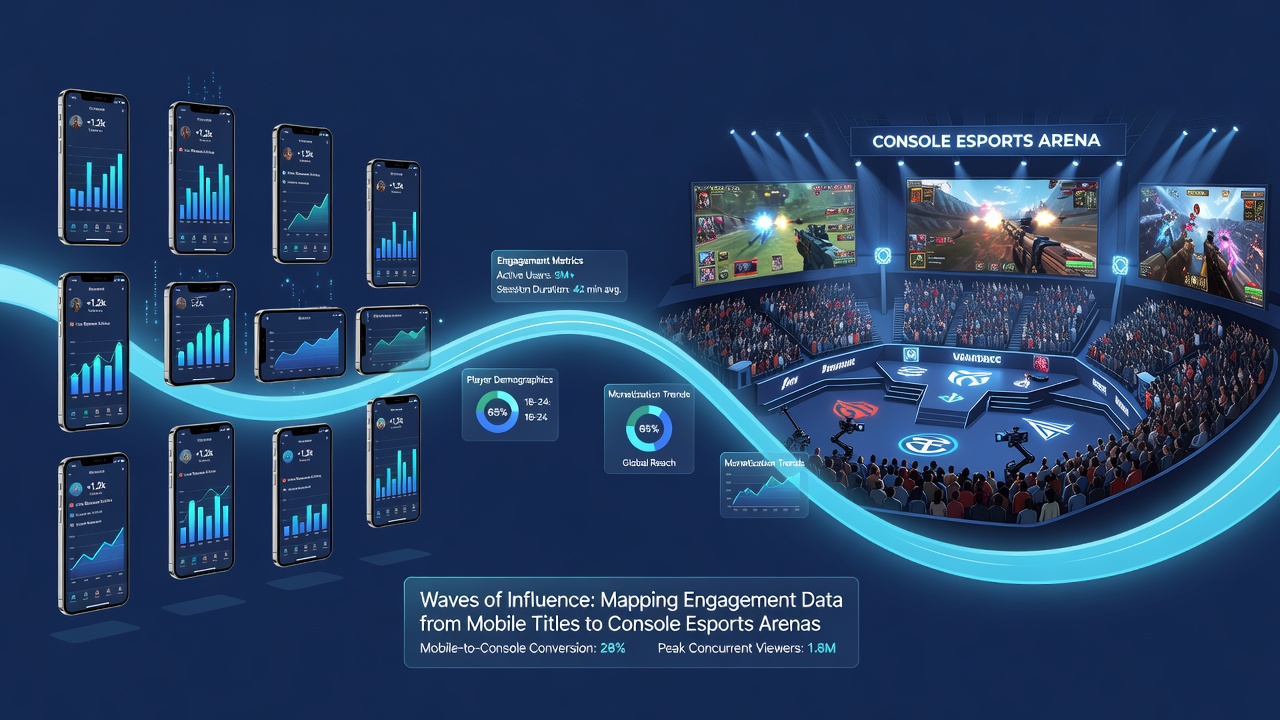
Another instance involved a mobile role-playing title whose seasonal events correlated with elevated console esports team registrations six weeks later. University researchers at the University of Alberta tracked these correlations through public API data and confirmed the lag interval held steady across three consecutive cycles. Organizers subsequently incorporated the six-week lead time into their calendar planning, and participation forecasts improved accordingly.
Industry Infrastructure Supporting the Shift
Cloud-based analytics platforms now offer unified dashboards that merge mobile and console datasets, and these platforms allow teams to monitor engagement velocity in near real time. Trade associations in the European Union have published guidelines on data anonymization practices that facilitate such merging while complying with regional privacy standards. The guidelines emphasize aggregated reporting rather than individual tracking, and they have been adopted by several major leagues ahead of the 2026-2027 season.
Hardware manufacturers contribute by embedding standardized telemetry hooks into both mobile and console devices, which reduces friction when researchers attempt to align datasets from different manufacturers. August 2026 updates to these hooks enabled finer-grained session logging, and early adopters reported clearer visibility into cross-platform migration patterns. The result is a growing body of evidence that mobile engagement serves as a leading indicator for console esports activity rather than a parallel but separate phenomenon.
Conclusion
Cross-device engagement mapping continues to evolve as more organizations standardize data sharing protocols and refine predictive models. Reports from multiple regions demonstrate that mobile metrics already influence console tournament design, scheduling, and resource allocation. Continued collection of aligned datasets will likely strengthen these connections, providing clearer visibility into how player behavior on smaller screens shapes larger arena competitions.